Nordic Collaboration: CAISA x Nora.ai x WASP-HS
Nordic Academic AI Initiatives Formalize Collaboration on Social Sciences and Humanities in AI Research
Launch of NAIP-HS – Nordic AI Partnership for Humanity and Society
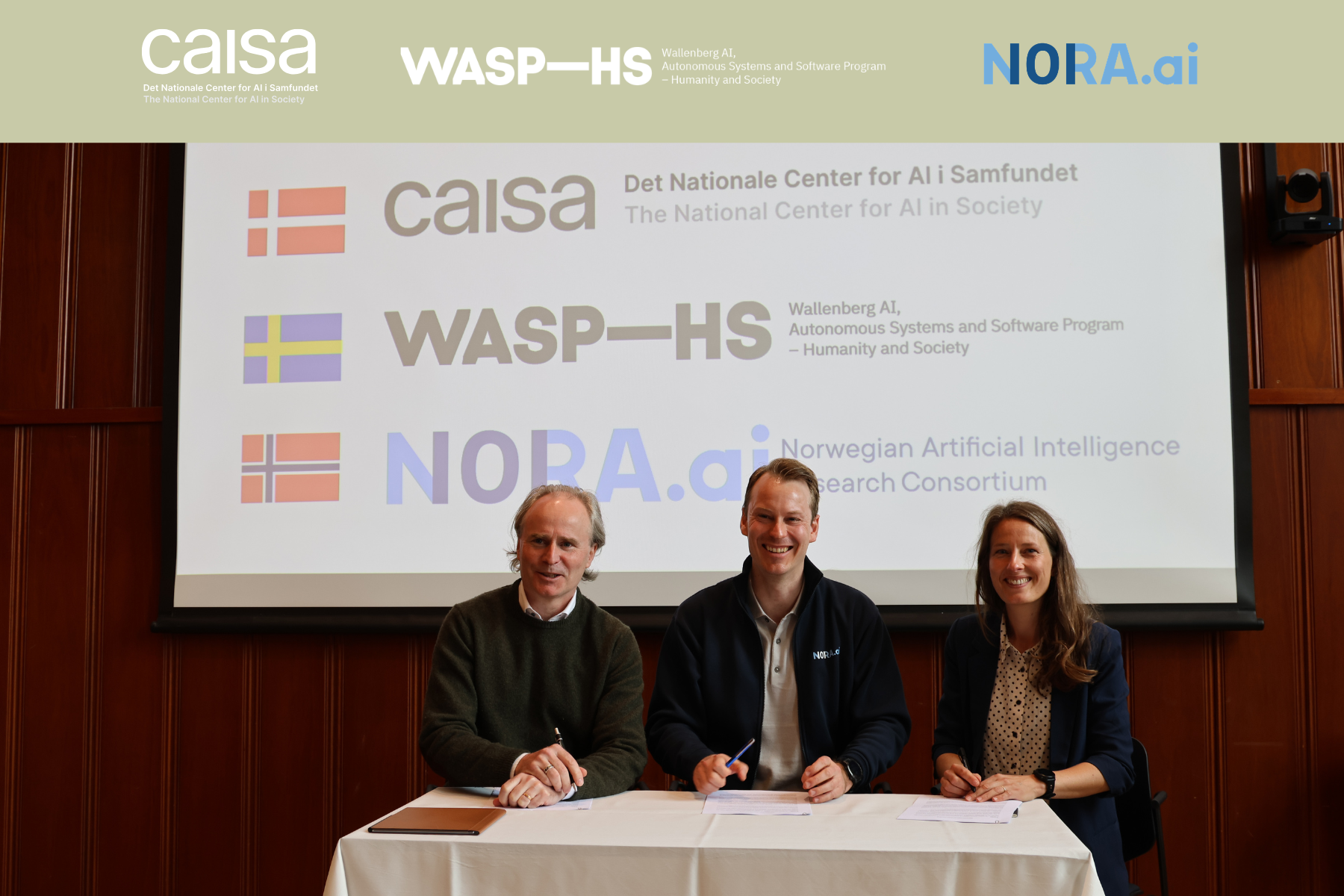
National academic AI initiatives in Sweden, Denmark, and Norway have signed a Memorandum of Understanding (MoU) to strengthen their collaboration and amplify the role of Social Sciences and Humanities (SSH) in AI research. The partnership aims to create a unified Nordic voice that can advise policy makers and ensure that the transformative effects of AI on society is aligned with human-centric and democratic values. The leaders of the partners met in Oslo on 8 June, 2026, to sign the MoU.
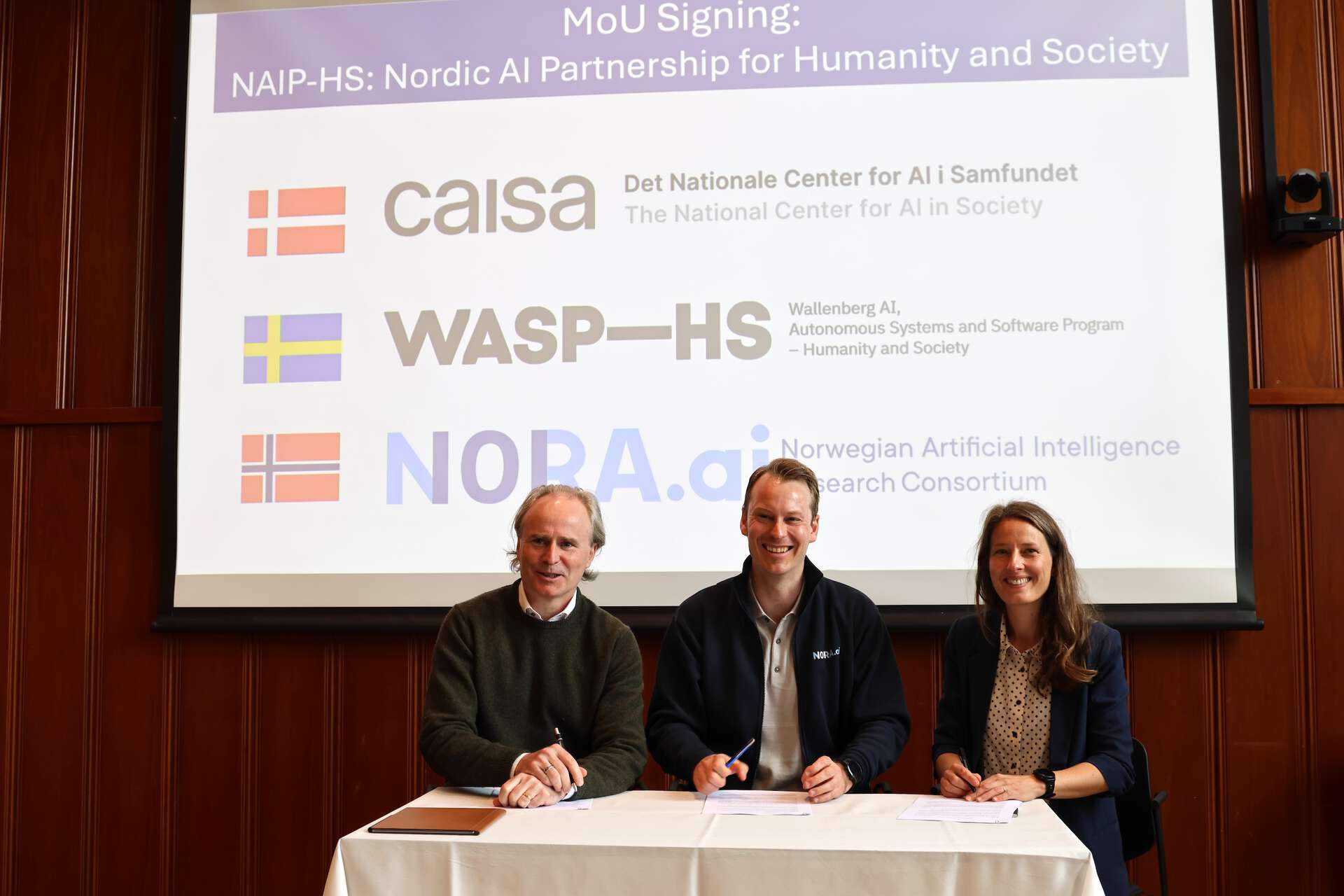
The agreement unites Sweden’s WASP-HS (The Wallenberg AI, Autonomous Systems and Software Program – Humanity and Society), Denmark’s CAISA (the National Centre for Artificial Intelligence in Society), and Norway’s NORA (Norwegian Artificial Intelligence Research Consortium). Together, these institutions aim to consolidate existing efforts within the three countries, creating a stronger, unified voice for SSH in AI research and education.
The Scandinavian countries share deep cultural, historical, and political ties that have fostered strong regional collaboration and mutual trust. Together, they form a region characterized by high standards of living, comprehensive welfare systems, and a strong commitment to democracy, inclusion, and human rights. SSH research plays a crucial role in ensuring that the development and adoption of AI remain aligned with these shared societal values.
The agreement establishes a Scandinavian collaboration on SSH perspectives in AI, while building on the broader Nordic AI Partnership, formalized through an existing MoU between the Norwegian NORA, the Swedish WASP (The Wallenberg AI, Autonomous Systems and Software Program), the Danish Pioneer Centre for AI (P1), The Finnish FCAI (Finnish Center for Artificial Intelligence), and the Icelandic CADIA (Center for Analysis and Design of Artificial Agents). While that collaboration primarily connects leading technical AI environments across the Nordic region, the new agreement strengthens collaboration on the SSH dimensions of AI, helping bridge the gap between technical AI research and Social Sciences and Humanities perspectives. Going forward, the Nordic AI Partnership will provide the parties with a basis for expanding the SSH-MoU into a Nordic collaboration that includes Finland and Iceland.
A key mission of the collaboration is bridging the gap between researchers and policymakers. By working together, the partners seek to ensure that politicians and decision-makers in the Nordic countries receive expert advice and evidence-based recommendations on the societal and ethical implications of artificial intelligence.
The Nordic AI Meet, a scientific conference launched by NORA in 2021 and funded by the Research Council of Norway since 2022, plays a central role in this effort. Designed to support young researchers, the conference provides a platform for sharing knowledge, fostering collaboration, and building connections between academia and society. With Denmark hosting in 2023, Finland in 2024, Sweden in 2025, and Iceland hosting from October 14 to 15 in 2026, the conference has become a cornerstone of Nordic AI cooperation and visibility.
From 2026, the Nordic AI Meet will be funded through the Norwegian AI Research School for Humanities and Society, NORA-HS. The idea of the current MoU emerged from a collaboration between NORA-HS and the Graduate School of WASP-HS. The MoU expands this collaboration and lifts it to a higher level by formalizing a partnership and strengthening the Nordic AI Meet as a platform for unified communication both from the technical and SSH sides of AI research. By consolidating resources and expertise, the collaboration aims to enhance academia’s visibility and influence in society, ensuring the Nordic region leads in addressing the challenges and opportunities of artificial intelligence.
The signing of the MoU marks a significant milestone for SSH research within the Nordic AI ecosystem, setting the stage for closer collaboration, stronger academic representation, and a lasting impact on the development and application of artificial intelligence.
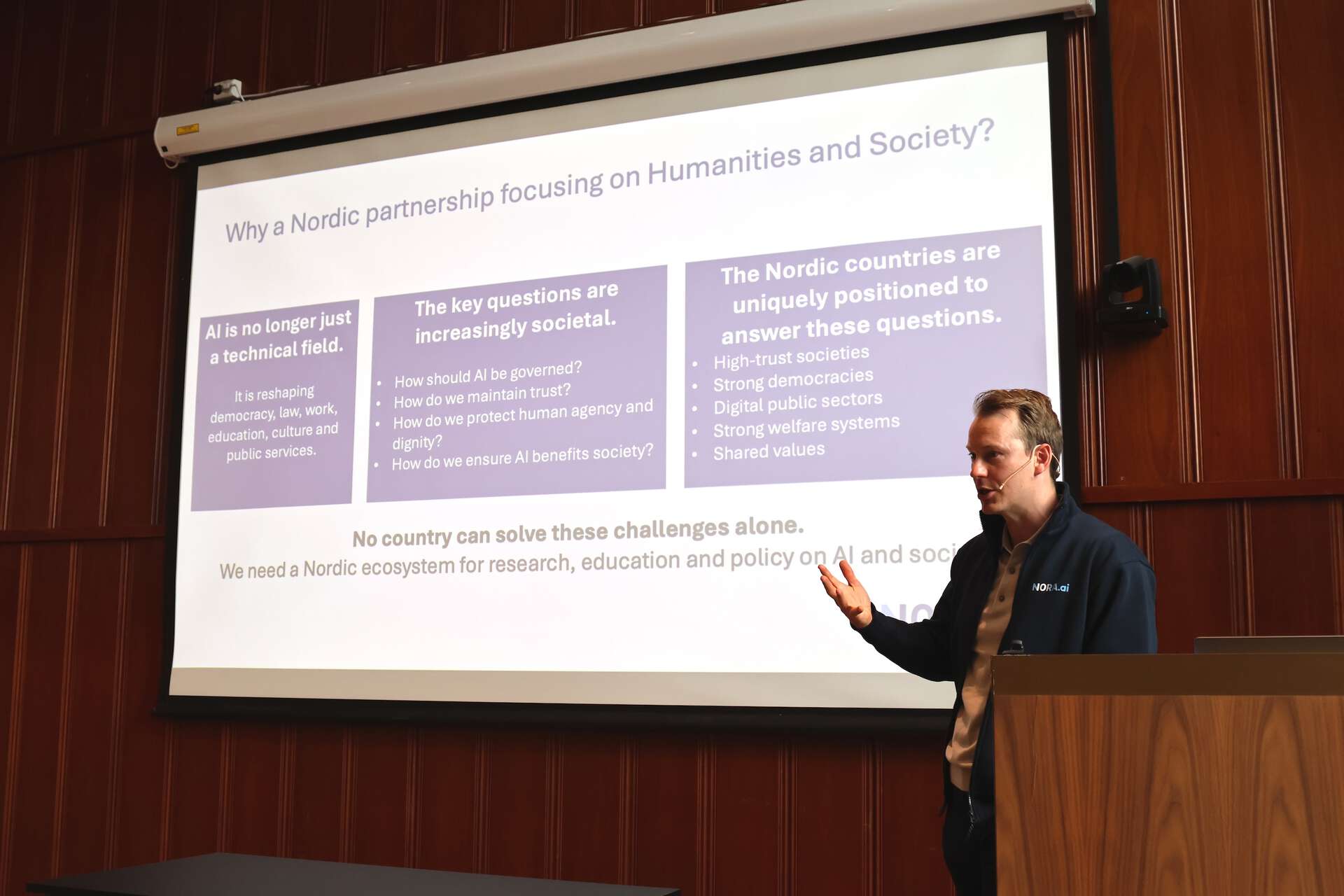
The leaders of the partners see this collaboration as a key milestone for both academia and society. Here’s what they have to say about the initiative:
Christofer Edling, Program Director at WASP-HS: AI is transforming not only technology, but society as well. We look forward to working closely with our Nordic partners to ensure that perspectives from the humanities and social sciences remain at the forefront during this unprecedented time.
Stine Lomborg, Chief Scientist at CAISA: As AI becomes increasingly embedded in our personal lives, work, and societal institutions, there is an urgent need to understand its transformative capacity. Nordic collaboration will be key to bringing SSH insights to the fore, developing talent in research and education, and steering developments of AI in society to ensure they benefit us all.
Michael Solvang, CEO of NORA: The Norwegian ‘AI Billion’, which has now materialised into six national AI centres, recognised from the beginning that AI is not only about technology, but also about its societal consequences. To meet the need for SSH competence in this area, NORA established the NORA-HS research school, inspired by WASP-HS. Building on that experience and the Nordic AI Partnership, we saw an opportunity to strengthen Nordic collaboration on AI and society. We are therefore very proud to take this first step together through NAIP-HS. I also see this as a small, but important, contribution to strengthening AI Sovereignty through Nordic collaboration.

Briefet er i øjeblikket kun tilgængeligt på engelsk.
Resume (oversat)
Gennem seks bidrag fra førende europæiske forskere inden for deres respektive områder undersøger dette forskningsbrief udfordringerne ved at regulere AI-genereret indhold i et informationsmiljø, hvor sådant indhold i stigende grad bliver normen. Med afsæt i tværfaglige perspektiver vurderer bidragene både effektiviteten og begrænsningerne ved nye tilgange til AI-transparensstyring – særligt mærkningskravene i EU's AI-forordning samt den kommende adfærdskodeks for markering og mærkning af AI-genereret indhold. Selvom transparensmærkninger er normativt væsentlige for at informere brugere om indholdsophav, peger forskningen på, at mærkning alene næppe er tilstrækkelig til at modvirke manipulation, genoprette tillid eller reelt styrke borgernes handlekraft. Briefet argumenterer derfor for behovet for et bredere transparensøkosystem, der kombinerer mærkning med styringsinfrastruktur, organisatorisk ansvarlighed og løbende forskning med henblik på at udvikle adaptive og evidensbaserede tilgange til AI-transparens.
Kunstig intelligens er rykket helt ind i kernen af dansk politik. Under regeringsforhandlingerne på Marienborg i april 2026 blev forhandlingerne midlertidigt sat på pause, så toppolitikere kunne deltage i et seminar om AI og dets betydning for samfundet.
Her bidrog CAISA's centerleder Rebecca Adler-Nissen sammen med professor Abraham Newman (Georgetown University) med forskningsbaserede perspektiver på AI's rolle i geopolitik, økonomi og demokrati. Deres oplæg adresserede blandt andet, hvordan kunstig intelligens påvirker sikkerhed, arbejdsmarked, uddannelse og Europas strategiske position.
Ifølge TV2 var der stor interesse blandt politikerne, som engagerede sig i spørgsmål om både teknologisk udvikling og samfundsmæssige konsekvenser. Rebecca Adler-Nissen fremhævede selv den høje grad af engagement og efterspørgsel på viden om AI's betydning på tværs af politikområder.
CAISA's deltagelse understreger centerets rolle i at bringe forskningsbaseret viden ind i politiske beslutningsprocesser og bidrage til en ansvarlig udvikling af AI i samfundet.
Digital suverænitet er flerdimensionel og kræver prioritering
I en tid med geopolitisk ustabilitet og hurtig AI-udvikling er kontrol over digital infrastruktur og data blevet afgørende. Selvom der er bred enighed om behovet for handling på nationalt, nordisk og EU-plan, mangler der et fælles sprog om digital suverænitet. Denne uenighed fører til enten handlingslammelse eller snævre tekniske løsninger uden strategisk retning.
Briefets kerneargument er, at digital suverænitet er et flerdimensionelt fænomen, der involverer både principiel stillingtagen og pragmatiske valg. Reducerer man det til tekniske løsninger, mister man synet for de værdier og valg, der bestemmer, hvem der kontrollerer og drager fordel af løsninger. Fokuserer man kun på værdier, ender man med tomme principper uden den nødvendige praktiske implementering og handlekraft. Digital suverænitet handler sjældent om et valg mellem fuld selvforsyning eller total afhængighed. I stedet drejer det sig om at balancere ofte modsatrettede krav om åbenhed, sikkerhed, konkurrenceevne, vækst, værdier og rettigheder i en verden med ujævnt fordelte kapaciteter.
Det betyder, at man må definere, hvem eller hvad der præcist skal beskyttes eller fremmes – inden for domænerne sikkerhed, økonomisk vækst eller borgerrettigheder – og erkende, at valg i ét domæne kan styrke eller underminere et andet. Briefet fokuserer på AI som det område, hvor digital suverænitet aktualiseres skarpest, men begreberne gælder for digital infrastruktur og data bredere. Briefet giver beslutningstagere redskaber til at håndtere disse dilemmaer ved at præsentere:
- En begrebslig ramme til at identificere, hvem eller hvad der skal være digitalt suverænt
- Et overblik over hvordan man prioriterer digital suverænitet rundt om i verden
- En forståelse af, at suverænitet kan udøves gennem tre kontrolregimer: ejerskab, ekspertise eller regulering – men at ingen af disse kontrolregimer er tilstrækkelige alene.
Briefets centrale implikation er, at digital suverænitet kræver en integreret strategi, der kombinerer ejerskab, ekspertise og regulering og håndterer sammenhænge og afvejninger mellem sikkerhed, økonomisk vækst og borgerrettigheder gennem klare mål. Uden denne helhedsorienterede tilgang risikerer man ineffektiv regulering, ubrugelig infrastruktur eller manglende evne til at udvikle, vedligeholde og anvende løsninger i praksis samt - utilsigtet - at underminere sikkerhed, vækst eller rettigheder.